 Save
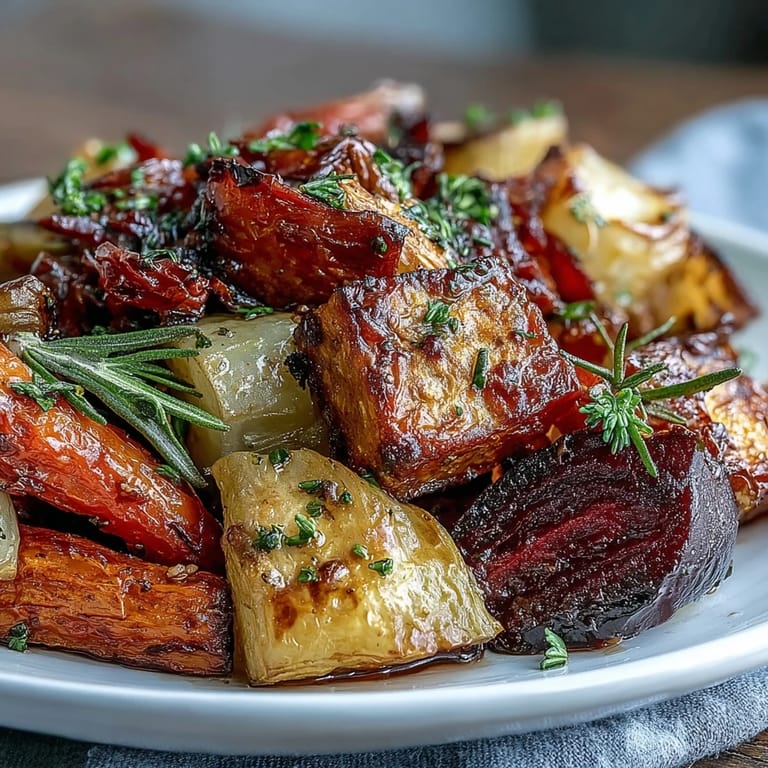
Save My kitchen smelled like caramelized earth the first time I roasted a sheet of mismatched root vegetables without a proper plan, just grabbing whatever was soft in the crisper drawer. What started as a lazy Sunday side dish turned into something that my partner couldn't stop eating straight from the pan, burnt edges and all. That chaotic moment taught me that roasted roots don't need fussy technique or fancy ingredients, just heat, time, and a little olive oil to transform into something genuinely craveable. Now this medley is my go-to when I want the kitchen to smell like autumn or when I need a side dish that feels more substantial than it has any right to be.
I made this for a potluck once where I genuinely forgot what I was bringing until I arrived, and it somehow became the thing people asked about before dessert. Someone's grandmother told me it reminded her of something she hadn't eaten in forty years, and that conversation alone made the whole evening worth it. Since then, I've learned that simple roasted vegetables have this unexpected power to spark memories in other people's kitchens, not just mine.
Ingredients
- Carrots: Two medium ones cut into 1-inch pieces—they hold their shape while roasting and develop a subtle sweetness that deepens as they caramelize.
- Parsnips: Two medium parsnips, peeled and chunked the same size as the carrots—they're sweeter than you might think and crisp up beautifully at the edges.
- Sweet potato: One medium sweet potato, diced—adds creamy texture and natural caramel notes that anchor the whole dish.
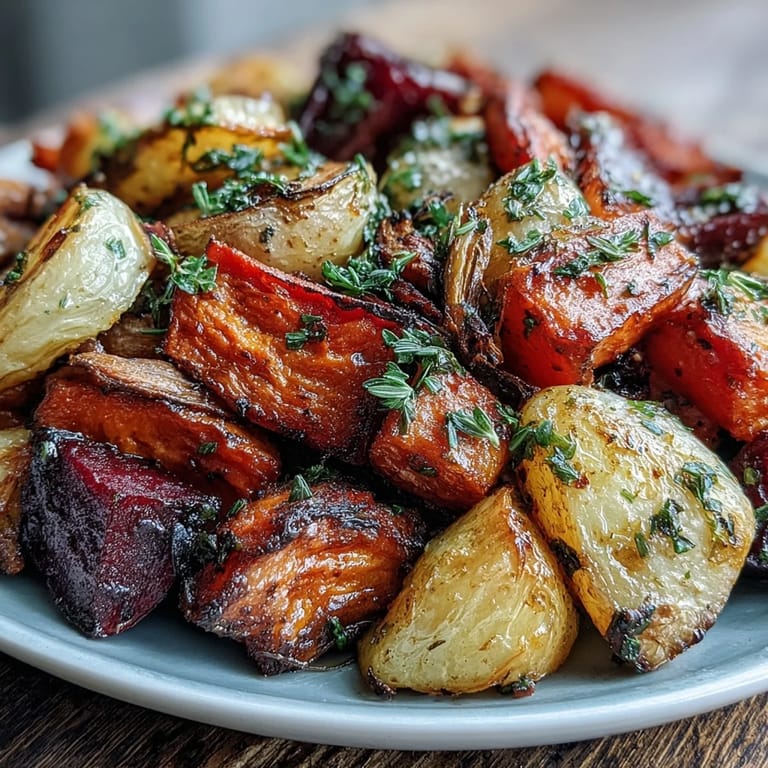
- Red beet: One medium beet, peeled and diced—brings earthiness and a stunning color that bleeds slightly into everything, which actually looks wonderful on the plate.
- Rutabaga or turnip: One small one, peeled and diced—gives a mild peppery note that keeps the sweetness from becoming cloying.
- Olive oil: Three tablespoons—enough to coat everything evenly and create those caramelized edges where the oil catches the heat.
- Kosher salt: One and a half teaspoons—use kosher, not table salt, because it dissolves more evenly and gives you better control over seasoning.
- Freshly ground black pepper: Half a teaspoon—grind it just before roasting so it hasn't lost its sharp bite.
- Dried thyme or fresh thyme leaves: One teaspoon dried or one tablespoon fresh—thyme is forgiving and plays well with every vegetable here without dominating.
- Dried rosemary or fresh rosemary: One teaspoon dried or one tablespoon fresh and chopped—use a light hand because rosemary can taste like pine if you overdo it, but it's exactly right when balanced.
- Garlic (optional): Three cloves, minced—adds aromatic depth, though the dish is completely lovely without it if you're not in the mood.
- Fresh parsley (optional): Two tablespoons, chopped—purely for brightness and a whisper of fresh color at the end.
Tired of Takeout? 🥡
Get 10 meals you can make faster than delivery arrives. Seriously.
One email. No spam. Unsubscribe anytime.
Instructions
- Heat your oven and prepare the stage:
- Set your oven to 425°F and line a large baking sheet with parchment paper. This matters because parchment prevents sticking and lets you get those crispy, caramelized edges without anything becoming a battle to remove.
- Gather and combine your vegetables:
- Peel and cut all your root vegetables into roughly 1-inch pieces, keeping them as uniform as possible so they roast at the same speed. Throw them all into a large bowl and take a moment to appreciate the colors—you're about to make them even more dramatic.
- Dress everything with oil and seasonings:
- Drizzle the olive oil over the vegetables, scatter the salt, pepper, thyme, rosemary, and minced garlic if you're using it. Toss with a spoon or your hands (hands are honestly better) until every piece is glistening and coated.
- Spread and roast:
- Transfer everything to your baking sheet in a single layer, letting the vegetables sit close but not touching. Roast for 35 to 40 minutes, stirring halfway through, until the edges are dark and caramelized and a fork slides through the softest piece with barely any resistance.
- Finish and serve:
- Pull the sheet from the oven and let it cool for two minutes so nothing falls apart when you move it. Transfer to a serving dish, scatter fresh parsley over the top if you have it, and serve while everything is still warm enough to release steam.
 Pin it
 There's a moment, around minute thirty, when you open the oven and the smell hits you like a warm memory you didn't know you had. That's when I know it's going to be good. Every time I make this, I'm struck by how a handful of basic vegetables and an oven can create something that feels like comfort without requiring technique or skill.
Which Vegetables Work Best
The recipe above is a solid foundation, but the truth is you can roast almost any root vegetable using this method. Potatoes, celeriac, sunchokes, Jerusalem artichokes, regular beets in different colors—they all transform under high heat. The key is cutting everything to roughly the same size so they finish cooking at the same time, and choosing vegetables you actually enjoy eating because that flavor is going to concentrate, not hide.
Flavor Variations That Actually Matter
I've experimented enough to know that a splash of balsamic vinegar drizzled just before roasting deepens everything, making the dish feel richer and more intentional. Fresh lemon zest scattered on top after roasting cuts through the sweetness in a way that's surprising and welcome. Smoked paprika, cumin, or even a pinch of cayenne can redirect the whole flavor profile depending on what you're serving it alongside, so don't hesitate to adjust based on what you're cooking for dinner.
Making It Work for Your Table
This medley slides into place as a side dish next to roasted chicken or fish without any fuss, but it also anchors vegetarian plates beautifully, especially if you serve it over quinoa or toss it into grain bowls. The sweetness and substance mean it feels substantial whether it's supporting something else or standing on its own. I've made it for dietary restrictions so many times that it's become my default answer when someone mentions they're vegetarian, vegan, or avoiding gluten.
- Pair it with herbs and proteins you love—this dish never fights for attention, it just complements.
- Make extra because cold roasted vegetables are honestly better than hot ones the next day mixed into salads.
- Don't skip the halfway stir, even though you want to—it's the difference between good and actually unforgettable.
 Pin it
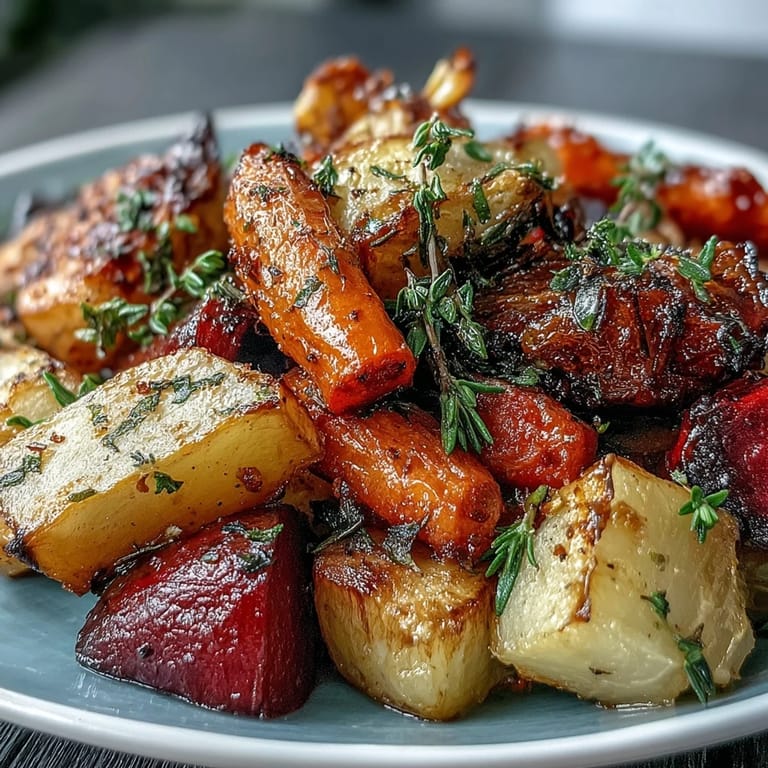
 This recipe became a cornerstone of my cooking because it proved that you don't need complexity to create something memorable. It's the kind of dish that quietly becomes the thing people ask you to bring, the side that disappears first from the table.
Frequently Asked Questions
- → What temperature should I use for roasting root vegetables?
Roast at 425°F (220°C) for optimal caramelization. This high heat ensures tender interiors and crispy, golden edges.
- → Can I substitute different root vegetables?
Absolutely. Try potatoes, celeriac, sunchokes, or any combination of your favorite root vegetables based on seasonality and preference.
- → How do I prevent vegetables from becoming soggy?
Spread vegetables in a single layer without overcrowding the pan. This allows proper air circulation and ensures even roasting.
- → Should I peel the vegetables before roasting?
Peeling is optional but recommended for tough-skinned varieties like beets and rutabaga. Thinner-skinned vegetables like carrots can be scrubbed well and left unpeeled.
- → Can I prepare this ahead of time?
Yes, cut vegetables up to a day in advance and store in water. Drain and pat dry thoroughly before tossing with oil and seasonings.
- → What herbs work best with roasted root vegetables?
Thyme and rosemary are classic choices. Fresh sage, oregano, or winter savory also complement the natural sweetness of root vegetables beautifully.