 Save
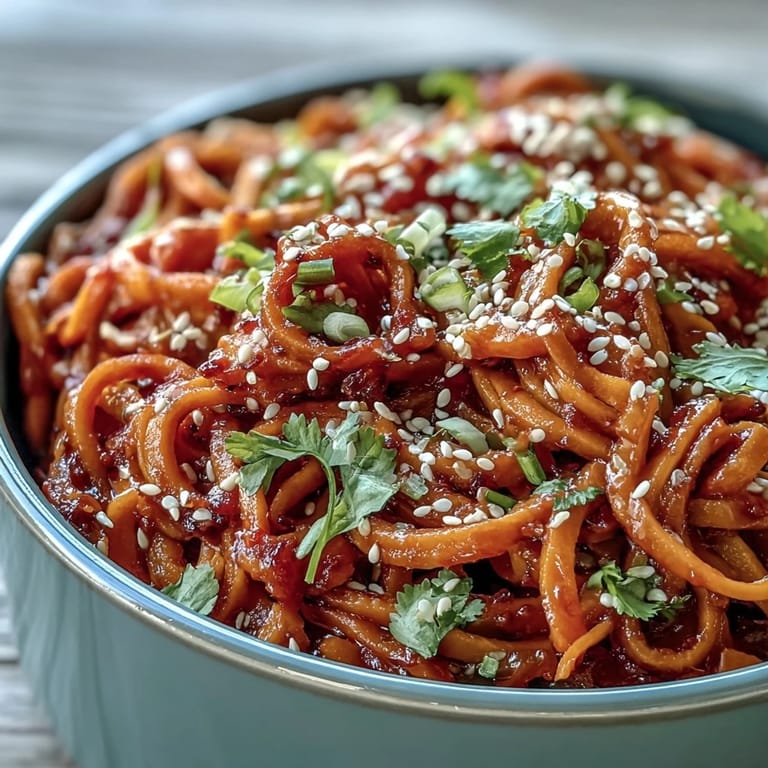
Save My housemate once bought a swede by accident, thinking it was a turnip. We stood in the kitchen staring at this enormous pale globe, debating what to do with it. I'd recently become obsessed with gochujang after discovering it at a Korean grocer tucked between a laundromat and a bakery. The paste had this perfect balance of heat and sweetness that made everything taste alive. So I peeled that swede into long ribbons, roasted them until they caramelized at the edges, and tossed them with rice noodles and a quick gochujang dressing. We ate it straight from the bowl, standing at the counter, amazed at how something so humble could taste this good.
I made this for a small dinner party once, worried people would be skeptical about swede as the star. But the moment I tossed everything together and the sesame oil hit the warm noodles, the kitchen smelled like a street food stall in Seoul. Everyone went quiet when they tasted it. One friend, who usually picks at vegetables, asked for seconds. That night taught me that the right sauce can make anyone fall in love with the most overlooked ingredients.
Ingredients
- Swede (rutabaga): Choose one that feels heavy for its size and has smooth skin, it should be firm without soft spots and when roasted into ribbons, it becomes sweet and almost meaty in texture.
- Rice noodles: I prefer the flat kind because they hold onto the dressing better than round ones, and rinsing them after cooking stops them from clumping.
- Gochujang: This fermented chili paste is the soul of the dish, offering depth and a gentle heat that builds rather than overwhelms.
- Maple syrup: It balances the saltiness and heat, and I find it blends more smoothly than sugar.
- Toasted sesame oil: A little goes a long way, adding a nutty richness that ties everything together.
- Spring onions: They bring a sharp, fresh bite that cuts through the richness of the dressing.
- Sesame seeds: Toast them yourself for a few minutes in a dry pan, the difference in flavor is worth it.
Tired of Takeout? 🥡
Get 10 meals you can make faster than delivery arrives. Seriously.
One email. No spam. Unsubscribe anytime.
Instructions
- Preheat and prep:
- Set your oven to 220°C (425°F) and let it get properly hot while you peel and slice the swede into thin ribbons using a vegetable peeler or mandoline. The thinner they are, the crispier the edges will get.
- Roast the swede:
- Toss the ribbons with vegetable oil, salt, and pepper, then spread them out on a baking sheet without overcrowding. Roast for 25 to 30 minutes, flipping halfway through, until the edges turn golden and slightly caramelized.
- Cook the noodles:
- While the swede roasts, boil the rice noodles according to the package instructions, usually just a few minutes. Drain them, rinse under cold water to stop the cooking, and set aside.
- Make the dressing:
- In a bowl, whisk together the gochujang, soy sauce, maple syrup, rice vinegar, sesame oil, garlic, ginger, and chili flakes if using. Add water a tablespoon at a time until it's smooth and pourable.
- Toss everything together:
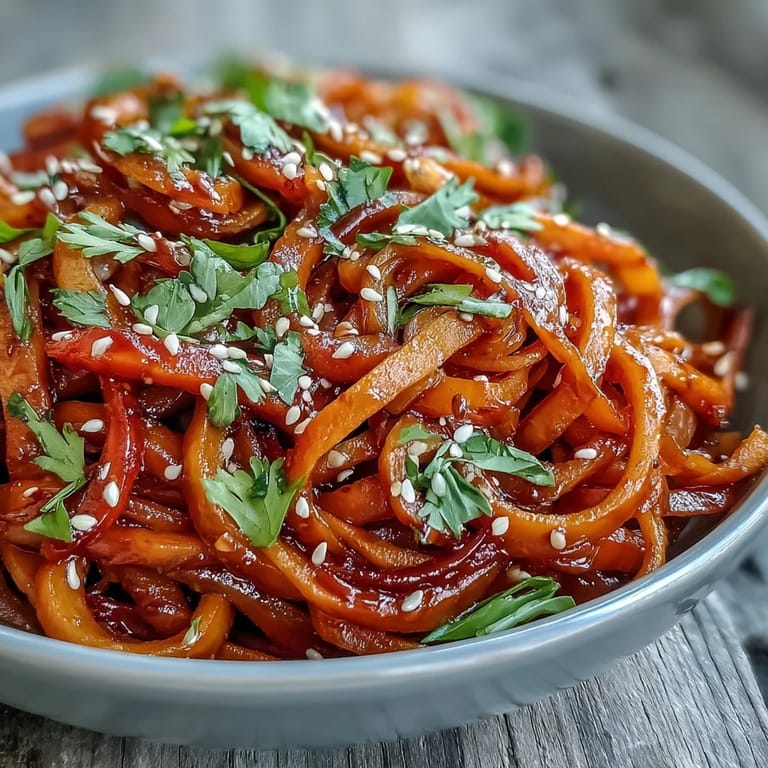
- In a large mixing bowl, combine the roasted swede, noodles, spring onions, carrot, and bean sprouts if using. Pour the dressing over and toss gently but thoroughly until everything is coated.
- Serve:
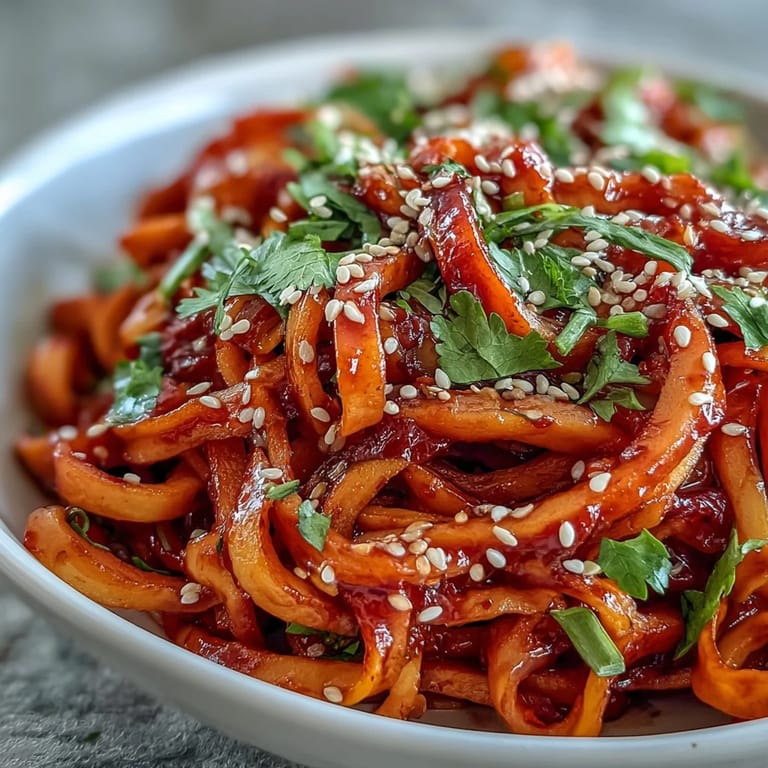
- Divide among bowls and top with toasted sesame seeds and fresh cilantro. Serve immediately while the swede is still warm and the noodles are slippery with dressing.
 Pin it
 One evening, I made this after a long day and ate it alone at my tiny kitchen table with the window cracked open. The steam rose into the cool air, and I could hear neighbors laughing somewhere down the street. It wasn't a special occasion, just a Tuesday, but the dish made me feel cared for in a way only good food can. That's when I realized recipes like this aren't just about feeding yourself, they're about creating small moments of comfort when you need them most.
Swapping and Adding
If you can't find swede, butternut squash or even thick carrot ribbons work beautifully with the same roasting method. I've also thrown in pan-fried tofu cubes for extra protein, and they soak up the dressing like little flavor sponges. Bean sprouts and julienned carrot add crunch, but they're optional, sometimes I skip them and add a handful of edamame instead. The beauty of this dish is that it adapts to whatever you have on hand without losing its character.
Storing and Reheating
Leftovers keep well in the fridge for up to two days, though the noodles will absorb some of the dressing as they sit. When I reheat, I add a splash of water or a drizzle of sesame oil to loosen everything up, and I do it gently in a pan rather than the microwave to keep the texture intact. The swede stays tender and the flavors deepen overnight, so it's almost like a different dish the next day. If you're meal prepping, store the dressing separately and toss everything together just before serving.
Serving Suggestions
This dish is hearty enough to stand on its own, but it pairs beautifully with a side of quick-pickled cucumbers or a simple cabbage slaw to add more crunch. I've served it warm as a main, cold as a noodle salad at a potluck, and even as a side alongside grilled vegetables. A crisp, slightly sweet Riesling or a cold light lager cuts through the richness and balances the heat.
- Top with crushed peanuts or cashews for extra texture.
- Add a squeeze of lime just before serving for brightness.
- Serve with a fried egg on top if you want to make it even more filling.
 Pin it
 This recipe reminds me that sometimes the best dishes come from accidents and curiosity, not careful planning. I hope it brings you the same kind of quiet joy it's brought me, whether you're cooking for a crowd or just for yourself on a random weeknight.
Frequently Asked Questions
- → Can I substitute swede with another vegetable?
Yes, you can use butternut squash, sweet potato, or parsnips. Adjust roasting time as needed based on the vegetable's density.
- → How do I make this gluten-free?
Use tamari instead of soy sauce and check your gochujang label to ensure it's certified gluten-free, as some brands contain wheat.
- → Can I make the dressing ahead of time?
Absolutely. The gochujang dressing can be prepared up to 3 days in advance and stored in an airtight container in the refrigerator.
- → What can I add for more protein?
Pan-fried tofu, edamame, or tempeh work beautifully. You can also add soft-boiled eggs if not strictly vegan.
- → How spicy is this dish?
The heat level is moderate, coming mainly from gochujang. Adjust by reducing the paste amount or omitting chili flakes for a milder version.
- → Can I use fresh noodles instead of dried?
Yes, fresh rice noodles work well. Reduce cooking time and follow package instructions, as they cook much faster than dried varieties.