 Save
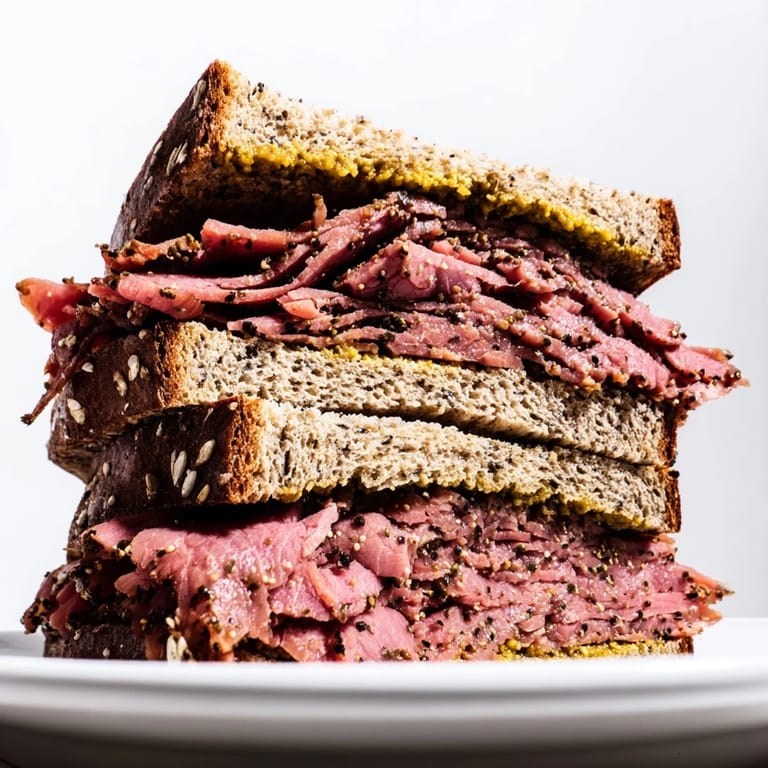
Save The first time I walked into Katz's Delicatessen, the steam rising from the carving station hit me like a warm embrace. I watched in awe as the server piled pastrami higher than I thought possible between two slices of dark rye. That moment taught me that a great sandwich isn't just about ingredients—it's about confidence and generous portions.
Last winter, when my friend Sarah was recovering from surgery, I brought over a stack of these sandwiches. She hadn't eaten well in days, but watching her eyes light up at that first messy bite reminded me why simple comfort food matters. We sat at her kitchen table, mustard on our chins, talking about everything and nothing.
Ingredients
- Fresh rye bread: Look for a bakery loaf with caraway seeds scattered throughout—that earthy aroma is what makes this sandwich sing
- Thinly sliced pastrami: Ask your deli counter to slice it paper thin, almost translucent, which lets the spices melt on your tongue
- Yellow deli mustard: The bright acidity cuts through the rich meat, though spicy brown mustard works if you prefer more heat
- Dill pickles: These aren't optional in my book—that crisp snap and brine balance every heavy, savory bite
Tired of Takeout? 🥡
Get 10 meals you can make faster than delivery arrives. Seriously.
One email. No spam. Unsubscribe anytime.
Instructions
- Prep your canvas:
- Lay out all four slices of rye bread on your cutting board or a clean countertop, taking a moment to appreciate the dark, rustic crust
- Spread the mustard:
- Using the back of a spoon, coat two slices generously with mustard—don't be shy, it should cover the surface completely
- Build the foundation:
- Pile half the pastrami onto each mustard-covered slice, letting it mound naturally rather than pressing it down
- Close the deal:
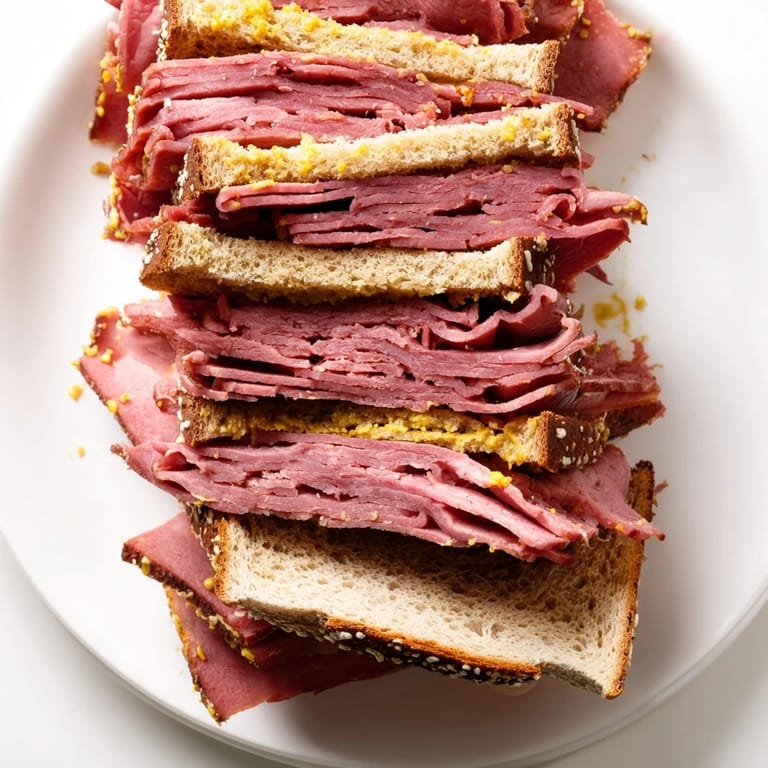
- Place the remaining bread slices on top and cut each sandwich diagonally if you want that classic deli presentation
 Pin it
 My dad used to make these every Sunday during football season, and the smell would drift through the entire house. Neighbors started showing up around noon with potato chips, claiming they were just 'passing by.' Those spontaneous sandwich gatherings became the highlight of our month.
Making It Restaurant-Quality at Home
The secret that elevates home versions to deli status is briefly steaming the pastrami. Place the meat in a colander over simmering water for about thirty seconds—it becomes impossibly tender and releases those aromatic spices. I learned this trick from watching a retired deli owner demonstrate techniques at a food festival, and it transformed my sandwich game forever.
Choosing the Right Rye
Not all rye bread is created equal, and I learned this the hard way after years of using whatever the grocery store stocked. A dense, slightly sour loaf with a sturdy crust holds up to the moisture from mustard and meat without turning into a sad, soggy mess. The caraway seeds should be visible, not sparse—those tiny bursts of anise flavor are what make you pause between bites.
Perfect Pairings
A classic deli sandwich deserves equally classic company. A cold Dr. Brown's cream soda or a sour pickle spear cuts through the richness. I've found that a simple coleslaw on the side adds the perfect crunch without competing with the main event. When serving guests, present everything on a wooden board for that authentic deli counter feel.
- Extra mustard on the side lets everyone customize their bite
- Keep pickles chilled until serving for maximum contrast
- Always slice sandwiches diagonally—it just tastes better that way
 Pin it
 There's something deeply satisfying about a sandwich made with intention and quality ingredients. Maybe that's why these have been feeding hungry New Yorkers for generations—they're simple, honest, and undeniably delicious.
Frequently Asked Questions
- → What makes pastrami different from corned beef?
Pastrami and corned beef both start with beef brisket, but pastrami is smoked and seasoned with a peppery spice blend after curing, giving it a deeper flavor and darker exterior. Corned beef is simply boiled or simmered with pickling spices.
- → Can I warm up the pastrami before assembling?
Absolutely. Briefly steaming or microwaving the pastrami for 20-30 seconds renders some fat and enhances tenderness. Many delis steam their pastrami before serving for that classic texture.
- → What type of mustard works best?
Yellow deli mustard or spicy brown mustard are traditional choices. The sharp tang cuts through the rich pastrami perfectly. Avoid honey mustard or sweet varieties as they don't provide the necessary contrast.
- → Should I toast the rye bread?
It's a matter of preference. Traditional New York delis typically serve it on soft, fresh rye. Light toasting adds crunch but may make the sandwich harder to bite through when piled high with meat.
- → How do I get authentic deli-style results at home?
Use high-quality freshly sliced pastrami from a deli counter rather than pre-packaged versions. Ask for it cut paper-thin against the grain. Fresh rye with caraway seeds and good mustard make all the difference.
- → What sides complement this sandwich?
Classic deli sides include dill pickle spears, potato chips, coleslaw, or potato salad. A sour pickle provides the perfect acidic contrast to the rich, salty pastrami.