 Save
Save One afternoon, my neighbor dropped off a bundle of lemongrass from her garden, and I stood there holding it like I'd been handed treasure, wondering what on earth to do with it. That's when I remembered a soup I'd had at a small restaurant tucked away in a Bangkok side street, all fragrant and green and impossibly comforting. I decided to recreate it from memory that very evening, throwing together what I had on hand, and somehow it worked—better than I expected, actually. This soup became my answer to those days when I needed something that felt both exotic and deeply nourishing, ready in half an hour.
I made this for my sister during a particularly gray November when she needed something to shake her out of a funk. She sat at my kitchen counter, and the smell of the soup simmering pulled her out of her phone within seconds. By the time I poured it into bowls and garnished with coriander and chili, she was asking for the recipe before she'd even tasted it. That's when I knew this wasn't just a soup—it was the kind of thing that reminds people why they come to your kitchen.
Ingredients
- Fresh spinach: Get it washed ahead of time so you're not fussing with that when everything's heating up, and chop it roughly—the blender will handle the rest.
- Fresh coriander (cilantro): Use the whole thing, stems included, they carry so much of the flavor that people often throw away.
- Lemongrass: Strip away those papery outer layers first, then slice what's left finely so it releases its oils into the heat.
- Onion, garlic, and ginger: This trio is your flavor foundation, so don't rush through mincing them—the finer they are, the faster they'll build that aromatic base.
- Full-fat coconut milk: Don't reach for the light version here, you want that richness coating your mouth.
- Vegetable stock: Use something with real flavor, not the watery stuff that tastes like sadness in a carton.
- Soy sauce or tamari: Tamari is your friend if anyone at the table is gluten-sensitive, and honestly it's becoming my default anyway.
- White pepper: It gives a subtle warmth without the visual bite of black pepper, letting the soup stay this beautiful pale green.
Tired of Takeout? 🥡
Get 10 meals you can make faster than delivery arrives. Seriously.
One email. No spam. Unsubscribe anytime.
Instructions
- Start with the aromatics:
- Heat your oil in a large saucepan and add the chopped onion, letting it soften until it's translucent and the kitchen starts smelling like something good is happening. You'll know it's ready when you can press a piece with your spoon and it falls apart.
- Build the fragrance:
- Toss in your minced garlic, ginger, and lemongrass, and stay close for the next two minutes—this is when the magic starts, when those aromatics wake up and fill the air. Stir constantly so nothing catches or browns.
- Wilt the greens:
- Add your spinach and coriander (keeping a few leaves back for later), and watch as they collapse into nothing within a couple of minutes. It's satisfying, how much volume shrinks down.
- Pour and simmer:
- Add your coconut milk and stock, bring it to a gentle boil, then dial back the heat to let it bubble softly for 10 minutes. This lets all the flavors marry without losing any of that fresh brightness.
- Blend until creamy:
- Remove from heat and blend with an immersion blender until smooth, or work in batches with a countertop blender if that's what you have. There shouldn't be any grittiness or chunks—just pure, silky soup.
- Final season and rest:
- Return it to the pot, stir through your soy sauce, white pepper, and salt to taste, then let it simmer gently for two more minutes. Taste again before serving because this is your last chance to adjust.
- Serve with care:
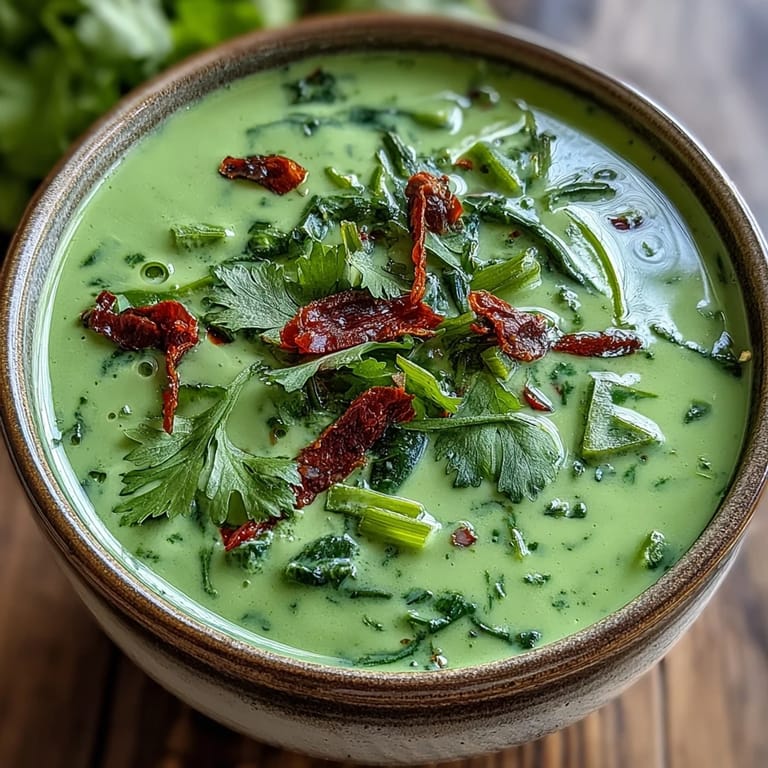
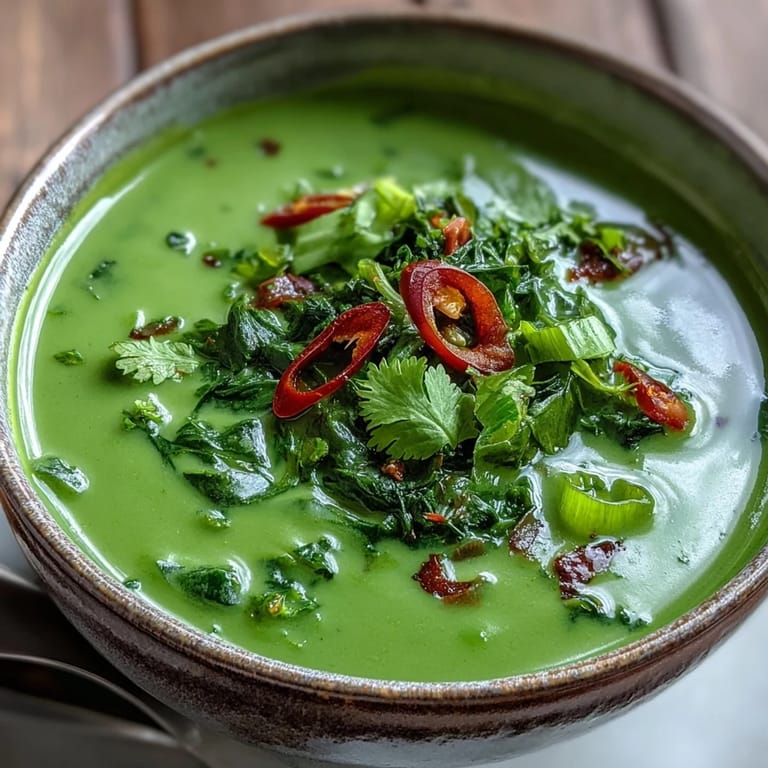
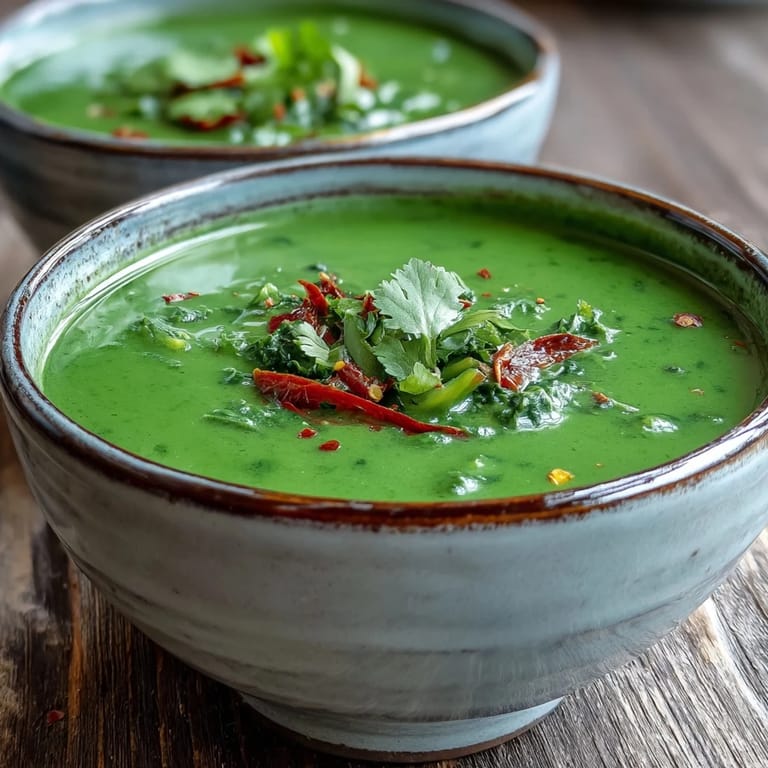
- Ladle into bowls and top with fresh coriander leaves and sliced red chili if you're feeling it. Serve hot, the way it was meant to be.
 Pin it
 What stays with me is how this soup became a thing I make when people I love are struggling or tired or just need to sit across from someone who made them something that tastes like care. It's green and alive and somehow both sophisticated and honest in the way that real food should be.
The Lemongrass Difference
If you've never cooked with lemongrass before, it can feel intimidating—that pale green stalk doesn't look like much until you slice it and suddenly your kitchen smells like a vacation. The key is being aggressive about stripping those outer layers away, because they're genuinely too tough to eat even after blending. Once you've got to the tender inner part, slice it thin and let the heat coax out all that lemony, almost tropical flavor that grounds the soup in something distinctive.
Making It Your Own
This is a soup that invites tinkering without requiring it. A squeeze of lime juice at the end wakes everything up if you're feeling like the soup needs brightness. A dollop of the coconut cream (the thick part that separates in full-fat cans) swirled on top adds richness and visual drama. Some people add a chopped green chili with the garlic and ginger if they want heat—I sometimes do this, sometimes don't, depending on my mood and who's eating.
Serving and Storage
This soup is best eaten the day you make it, when all those fresh herb notes are at their brightest. It'll keep in the fridge for a couple of days and actually reheats beautifully on the stove over low heat, never in the microwave where coconut milk can separate and break. Serve it with something to soak it up—crusty bread or steamed jasmine rice, depending on whether you want a light meal or something more substantial.
- Store in an airtight container and use within three days for best flavor.
- Reheat gently on the stove, stirring occasionally, until it's warmed through completely.
- Freeze it if you need to, though the coriander flavor fades slightly—but it's still delicious weeks later.
 Pin it
 This soup reminds me why I cook at all—not to impress, but to create moments where people feel seen and cared for. Make it for someone who needs it, or just for yourself on a day when you need to taste something alive.
Frequently Asked Questions
- → Can I use frozen spinach instead of fresh?
Yes, you can substitute with 150g frozen spinach. Thaw and drain excess water before adding to the pot. Fresh spinach provides better color and texture, but frozen works well in a pinch.
- → What can I use if I don't have lemongrass?
Replace lemongrass with 1-2 teaspoons of lemongrass paste, or use the zest and juice of half a lemon added at the end of cooking for a similar citrus note.
- → How do I store and reheat leftovers?
Store in an airtight container in the refrigerator for up to 3 days. Reheat gently on the stovetop over medium-low heat, stirring occasionally. Add a splash of stock if it thickens too much.
- → Can I make this soup ahead of time?
Absolutely. The flavors actually develop and deepen when made a day ahead. Prepare completely, cool, and refrigerate. Reheat gently before serving and adjust seasoning as needed.
- → Is this soup suitable for freezing?
Yes, this soup freezes well for up to 2 months. Cool completely before transferring to freezer-safe containers. Thaw overnight in the refrigerator and reheat gently on the stovetop.
- → How can I make this soup more filling?
Add protein like cubed tofu, chickpeas, or white beans during the simmering stage. Serve with crusty bread, rice noodles, or jasmine rice for a more substantial meal.