 Save
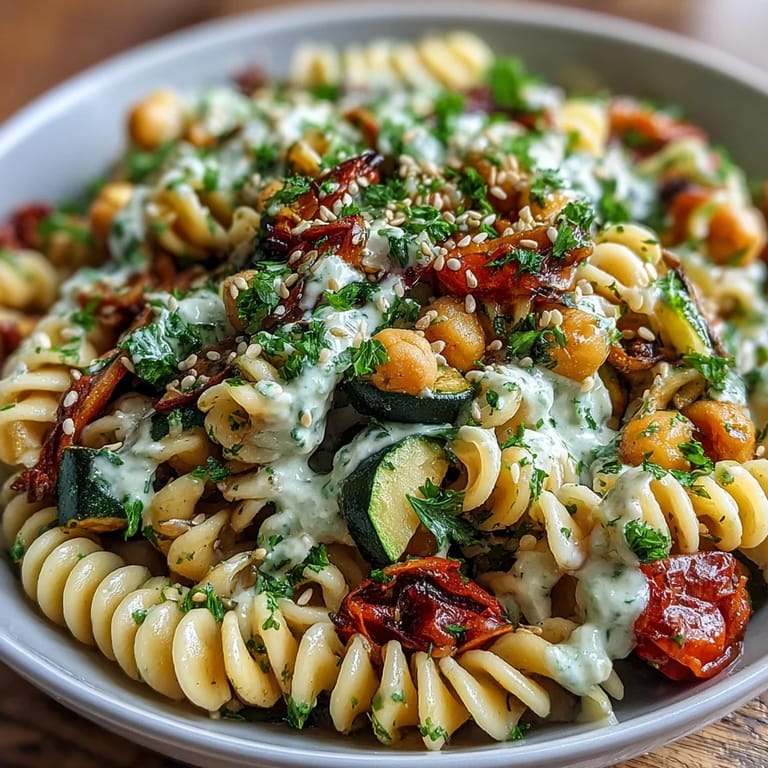
Save My kitchen smelled like roasted paprika the afternoon I first tossed chickpea pasta with tahini sauce, and I remember thinking how something this simple could feel so complete on a plate. There's a certain honesty to building a bowl around whole ingredients—no cream, no pretense, just vegetables that actually taste like themselves. This dish found me during one of those phases where I wanted to eat better without sacrificing flavor or the comfort of a warm, satisfying meal. The tahini sauce was the revelation, turning what could've been plain into something creamy and alive with lemon. Now it's my go-to when I need something that feels nourishing and tastes genuinely good.
I made this for friends on a Sunday evening when someone mentioned being vegan, and instead of stress, I felt that quiet satisfaction of knowing I had something genuinely delicious ready in my kitchen. Watching them come back for seconds, asking about the sauce, reminded me that the best meals are often the ones that happen without fanfare. It became the dish I bring to potlucks now, the one people actually finish.
Ingredients
- Chickpea pasta (340 g): This stuff is denser and heartier than regular pasta, with enough protein that you won't miss meat or dairy—cook it exactly by package time or it turns to mush.
- Zucchini (1 medium, diced): Roasting it at high heat makes the edges crispy while keeping the center tender; it's the textural secret nobody talks about.
- Red bell pepper (1, chopped): The natural sweetness intensifies in the oven, becoming almost caramelized—this is why color matters in roasted vegetables.
- Red onion (1 small, sliced): It mellows beautifully when roasted, losing its sharp bite and gaining a subtle sweetness.
- Cherry tomatoes (1 cup, halved): Choose ones that smell fragrant; they'll burst slightly during roasting and create these little flavor pockets throughout the bowl.
- Olive oil (2 tablespoons): This is your conductor—it helps everything caramelize evenly, so don't skimp.
- Dried oregano and smoked paprika: Oregano brightens the vegetables while paprika adds depth and a whisper of smoke that ties everything together.
- Tahini (60 g): Buy the kind that separates (with oil on top) rather than the pre-stirred versions—it signals better quality and truer flavor.
- Lemon juice (2 tablespoons): Freshly squeezed changes everything; bottled juice tastes flat by comparison and the sauce loses its brightness.
- Maple syrup or agave: Just a touch balances the tahini's earthiness and lemon's pucker—this is why the sauce tastes restaurant-quality.
- Garlic (1 clove, minced): Raw garlic in the sauce adds bite; mince it fine so it distributes evenly instead of leaving sharp chunks.
- Fresh parsley and sesame seeds: These finish the bowl, adding color and texture—they're not optional if you want it to feel complete.
Tired of Takeout? 🥡
Get 10 meals you can make faster than delivery arrives. Seriously.
One email. No spam. Unsubscribe anytime.
Instructions
- Set your oven to high heat:
- Preheat to 220°C (425°F) and line a baking sheet with parchment paper so your vegetables release easily and everything browns instead of steams.
- Prepare the vegetable mixture:
- Toss your diced zucchini, bell pepper, red onion, and halved tomatoes in a large bowl with olive oil, oregano, smoked paprika, salt, and pepper until everything glistens. The oil coating is crucial—it ensures even roasting and caramelization.
- Roast until the edges turn golden:
- Cook the chickpea pasta:
- While vegetables roast, bring salted water to a boil and cook the pasta according to package directions, stirring occasionally so it doesn't clump. Drain it well and set aside—any excess water will dilute your sauce.
- Whisk the tahini sauce:
- In a small bowl, combine tahini, freshly squeezed lemon juice, maple syrup, warm water, minced garlic, and a pinch of salt. Whisk steadily until smooth; if it's too thick, add water one tablespoon at a time until it reaches a pourable consistency.
- Bring everything together:
- In a large bowl, combine your cooked pasta and roasted vegetables, then drizzle generously with tahini sauce and toss gently so every strand gets coated without breaking.
- Plate and garnish:
- Divide between serving bowls, scatter fresh parsley and toasted sesame seeds on top, and serve warm or at room temperature—it's honestly good either way.
 Pin it
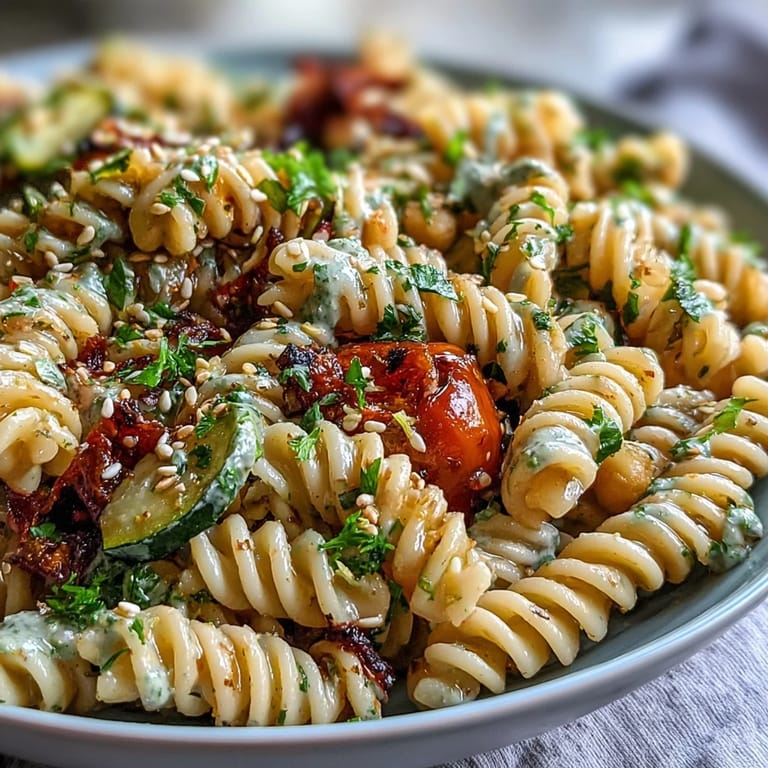
 There was a moment last winter when a friend who usually orders takeout sat at my table with this bowl, and between bites, she said, "I didn't know food like this existed outside restaurants." That's when I realized this recipe does more than feed you—it shows you that plant-based eating can be genuinely luxurious. It stays with you.
The Magic of Tahini Sauce
Tahini was always this mysterious ingredient I'd pass in the grocery store until I started understanding it as the backbone of something creamy without dairy. The sauce is equal parts lemon brightness and earthy richness—it's what makes this bowl feel complete. Once you nail the consistency (pourable but coating), you'll start drizzling it on everything: roasted vegetables, grain bowls, even as a dip for bread.
Roasting Vegetables Like You Mean It
High heat and a single layer are everything when you're roasting. Crowding the pan traps steam, and low heat just wilts things into sadness—but 220°C on a properly lined sheet turns ordinary vegetables into something caramelized and almost sweet. Stirring halfway through ensures even browning, and if you want those crispy edges everyone actually cares about, resist the urge to stir too often. Let them sit, let them char slightly, let them become better versions of themselves.
Making It Your Own
The beauty of a bowl like this is that it bends to whatever you have on hand. Winter calls for roasted carrots and Brussels sprouts; summer begs for eggplant and grilled zucchini ribbons. The chickpea pasta is the anchor, the tahini sauce is the constant, but everything else is negotiable. I've added grilled tofu, extra chickpeas, roasted broccoli, even leftover roasted cauliflower—the formula holds because the sauce ties it all together.
- Swap vegetables by season: eggplant, broccoli, carrots, or asparagus all work beautifully.
- Boost protein by stirring in cooked chickpeas, grilled tofu, or even crumbled baked tempeh.
- Taste the sauce before serving and adjust lemon juice or salt—this single step makes the difference between good and unforgettable.
 Pin it
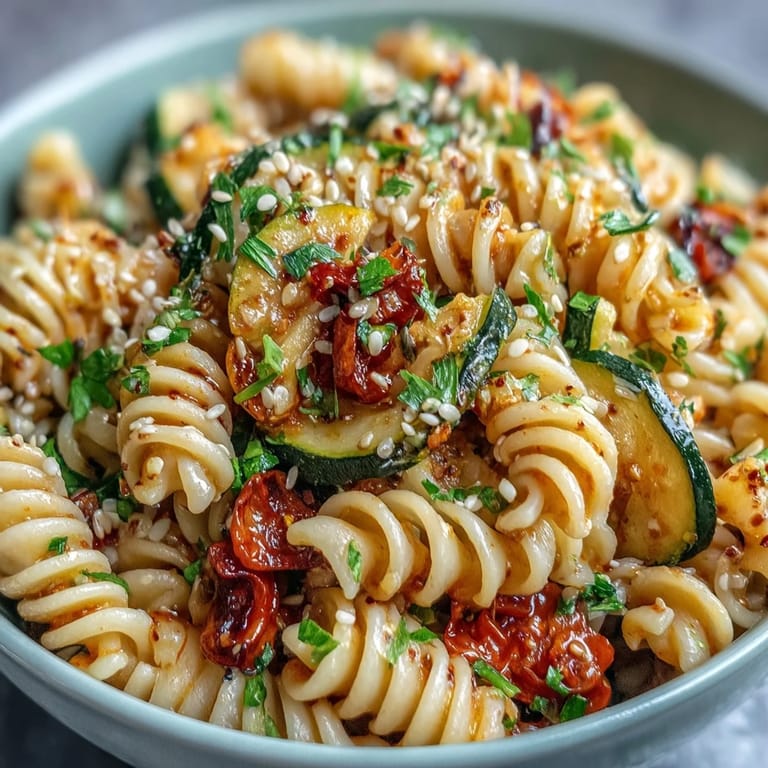
 This bowl teaches you that plant-based cooking isn't about restriction—it's about letting ingredients shine. Come back to it whenever you need something that feels both comforting and genuinely good for you.
Frequently Asked Questions
- → Can I use regular pasta instead of chickpea pasta?
Yes, you can substitute with whole wheat or gluten-free pasta. Cooking times may vary slightly, so check package instructions.
- → How long does the tahini sauce keep?
The tahini sauce stores well in an airtight container in the refrigerator for up to 5 days. It may thicken—simply whisk in a teaspoon of water before using.
- → Can I make this dish ahead of time?
Yes, you can roast vegetables and cook pasta up to 2 days in advance. Store separately and combine with fresh sauce when ready to serve.
- → What vegetables work best for roasting?
Zucchini, bell peppers, onions, and cherry tomatoes are ideal. You can also add eggplant, broccoli, cauliflower, or sweet potato based on seasonality.
- → Is this bowl high in protein?
Chickpea pasta provides about 17g of protein per serving. Adding extra chickpeas, tofu, or hemp seeds can boost protein content further.
- → Can I make the tahini sauce nut-free?
Try sunflower seed butter as an alternative to tahini. The flavor profile will shift slightly but still provide creamy texture.