 Save
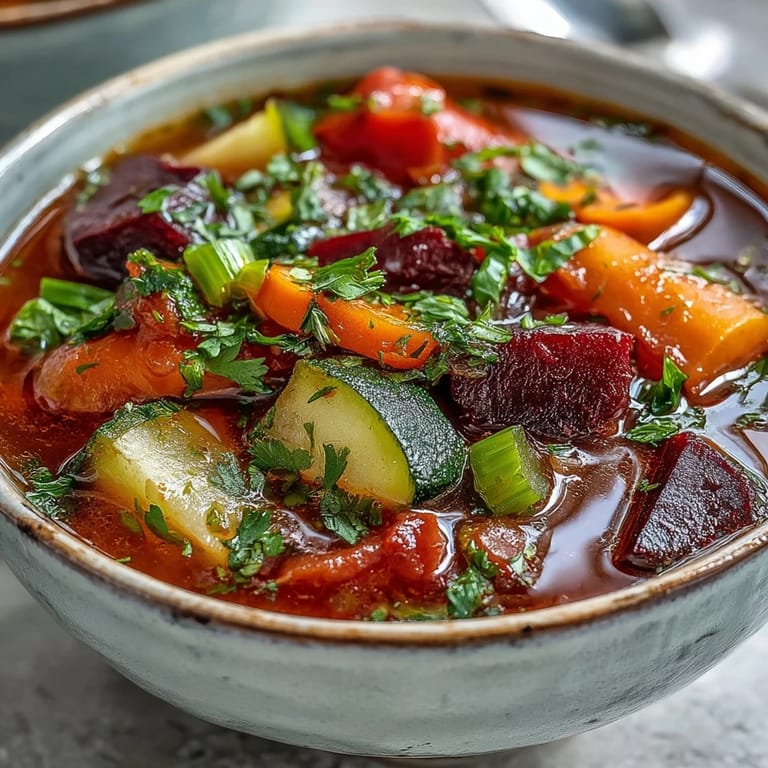
Save There's something quietly magical about watching a pot of clear broth transform into a rainbow of flavors and colors. My kitchen window faces east, and one morning while chopping vegetables for this soup, the sunrise caught the heap of diced beetroot in such a way that I stopped mid-slice to just stare at it. That's when I realized this wasn't just another soup recipe, it was an edible sunrise in a bowl.
I made this for a friend who'd just started her wellness journey, and she called me three days later just to say how good she felt. We both sat at my kitchen counter while it simmered, and the smell alone was doing something to her mood. She's made it every week since, and somehow that feels like the best compliment a recipe can get.
Ingredients
- Beetroot: The star that gives this soup its gorgeous deep color and earthy sweetness, though wear gloves when chopping or your hands will tell the story for days.
- Carrots: They add natural sweetness and body to the broth, sliced thin enough to cook through without turning to mush.
- Courgette: Stays delicate and slightly creamy without dominating the flavor profile, adding subtle cucumber-like freshness.
- Tomatoes: Bring acidity that brightens everything and prevents the soup from feeling heavy.
- Green bell pepper: Adds a gentle vegetal crunch and sweet undertone that ties the whole flavor story together.
- Red onion and garlic: The aromatic foundation that builds complexity in just those first few minutes of sautéing.
- Vegetable broth: Use good quality broth if you have it, as it becomes the soul of this dish and there's nowhere to hide weak flavoring.
- Olive oil: A single tablespoon is all you need since you're not frying, just releasing flavors.
- Spices (cumin, turmeric, smoked paprika): These warm spices are the secret that makes people ask what's in your soup, and they work together rather than fighting for attention.
- Lemon juice: Added at the very end to preserve its brightness and prevent it from cooking away.
- Fresh parsley or coriander: Not optional if you can help it, as the fresh herb finish is what elevates this from good to memorable.
Tired of Takeout? 🥡
Get 10 meals you can make faster than delivery arrives. Seriously.
One email. No spam. Unsubscribe anytime.
Instructions
- Build your base with aromatics:
- Heat the olive oil in a large pot over medium heat and add your chopped onion and minced garlic. You'll know they're ready when the kitchen fills with that unmistakable savory smell and the onion turns translucent, usually around 2 to 3 minutes.
- Introduce the sturdy vegetables:
- Add the diced beetroot, sliced carrots, and green pepper pieces. Let them cook for 4 to 5 minutes while stirring occasionally so they release their flavors into the oil without browning too much.
- Add the rest and season:
- Stir in your courgette and chopped tomatoes, then sprinkle in the cumin, turmeric, smoked paprika, salt, and pepper all at once. Give it all a good stir for about 2 minutes so the spices bloom and coat everything.
- Bring it all together:
- Pour in your vegetable broth and turn the heat up until you see active bubbles breaking the surface, then lower it to a gentle simmer. Let it bubble quietly uncovered for 20 to 25 minutes until every vegetable is tender enough to break apart with a spoon.
- Finish with greens and brightness:
- If you're using spinach, stir it in now and watch it wilt within 2 minutes, then remove the pot from heat. Add your lemon juice and taste everything before adjusting salt and pepper to your preference.
- Serve with intention:
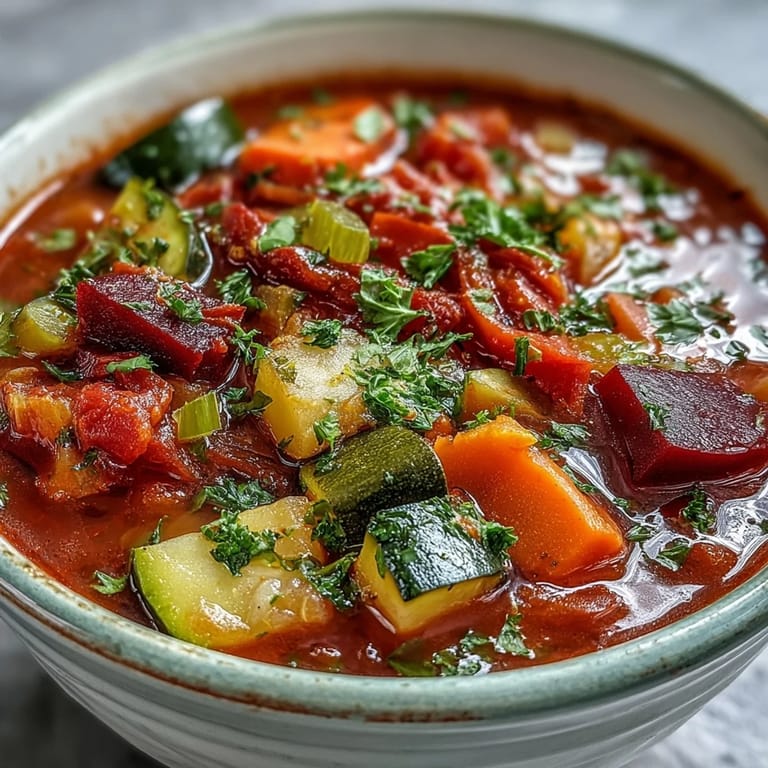
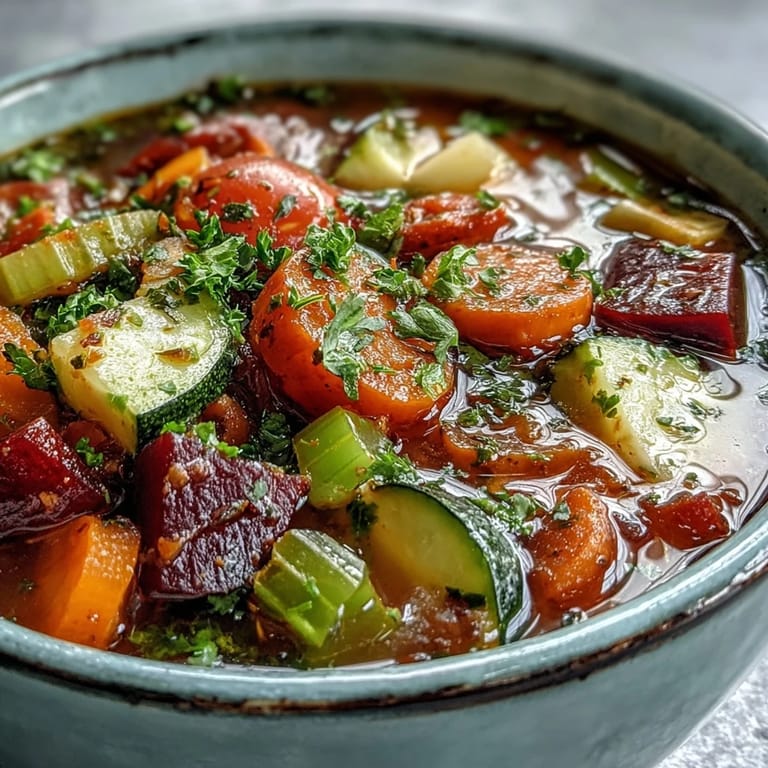
- Ladle into bowls and scatter your fresh herbs on top like you're creating something worthy of admiration. The color contrast between the dark soup and bright green herbs is half the pleasure.
 Pin it
 There was an afternoon when I made this soup for my mother while she recovered from illness, and she asked me to sit with her while she ate it. She said the colors made her feel like things were still worth looking forward to, which struck me in a way I hadn't expected. That's when I understood that food can be medicine in ways that have nothing to do with calories or nutrients.
How to Make It Your Own
This recipe is honestly a canvas more than a rigid formula. I've added sweet potato when carrots ran out, thrown in celery for extra body, even tossed in a handful of kale once and nobody noticed because the other flavors carried everything. The point is that you're not bound by the vegetable list, just by the principle of choosing a variety of colors and textures.
Stretching the Meal
If you want to turn this into something more substantial, there are gentle ways to do it without changing the character of the soup. A drained can of chickpeas adds protein without making it heavy, or you could serve it alongside thick slices of whole grain bread and watch people scoop up broth with every bite. Some evenings I add a dollop of hummus on the side just because the creaminess contrasts beautifully with the bright vegetables.
Storage and Keeping
This soup actually tastes better on the second day once the flavors have had time to get to know each other in the refrigerator. Store it in glass containers if you can because the beetroot won't stain as easily, and it keeps for about four days before the vegetables start losing their character. You can also freeze it for up to three months, though the texture of the vegetables softens slightly, which honestly doesn't matter once you reheat and taste.
- Always let the soup cool to room temperature before refrigerating to avoid condensation and flavor dilution.
- When reheating, add a splash of fresh vegetable broth to restore the silky consistency, since soup naturally concentrates as it sits.
- A fresh squeeze of lemon juice and a handful of herbs when you reheat transforms it back into something that feels freshly made.
 Pin it
 Make this soup when you need to feel like you're doing something right for yourself, not as punishment or obligation. It's the kind of dish that nourishes without making demands, and that's its greatest gift.
Frequently Asked Questions
- → Can I make this soup ahead of time?
Yes, this soup stores beautifully in the refrigerator for up to 4 days. The flavors actually deepen over time, making it perfect for meal prep. You can also freeze it for up to 3 months in airtight containers.
- → What can I substitute for beetroot?
Sweet potato or butternut squash work wonderfully as alternatives to beetroot. They'll provide a similar earthy sweetness and vibrant color while maintaining the soup's nutritious profile.
- → How can I make this soup more filling?
Add a can of drained chickpeas or white beans during cooking for extra protein and substance. You can also serve with crusty whole-grain bread or add cooked quinoa directly to the soup.
- → Can I blend this soup for a smoother texture?
Absolutely! You can blend half or all of the soup using an immersion blender for a creamier consistency. This works particularly well if you're serving it to children or prefer a velvety texture.
- → What other vegetables can I add?
Feel free to add seasonal vegetables like kale, celery, parsnips, or sweet potatoes. Just adjust cooking time accordingly to ensure all vegetables are tender. Red cabbage also adds beautiful color and nutrition.
- → Is this soup suitable for freezing?
Yes, this soup freezes exceptionally well. Allow it to cool completely, then portion into freezer-safe containers leaving space for expansion. Thaw overnight in the refrigerator and reheat gently on the stovetop.