 Save
Save My neighbor knocked on my door one evening holding a pot of chicken tikka masala, and I realized I had nothing but sandwich bread to offer. That awkward moment sent me straight into learning how to make naan, and I haven't looked back since. The smell of garlic butter hitting warm dough is now one of my favorite kitchen rituals. It's faster than ordering takeout and tastes like you've been perfecting it for years.
I made this for a small dinner party once, and everyone kept tearing off pieces before the main course even hit the table. One friend asked if I'd ordered it from a restaurant. I didn't correct her right away because I wanted to savor the compliment a little longer. When I finally admitted I made it myself, she demanded the recipe on the spot.
Ingredients
- All-purpose flour: This is your base, and using regular all-purpose keeps the texture soft and tender without getting too chewy.
- Active dry yeast: Make sure your water is warm but not hot, or you'll kill the yeast before it even gets started.
- Sugar: Just a teaspoon wakes up the yeast and gives it something to feed on during the rise.
- Warm water: Around 110°F is the sweet spot, it should feel like a comfortable bath on your wrist.
- Salt: Balances the dough and brings out all the other flavors without making it taste flat.
- Plain yogurt: This is what makes naan soft and slightly tangy, and it helps the dough stay moist.
- Oil or ghee: Ghee adds a richer flavor, but any neutral oil works if that's what you have on hand.
- Minced garlic: Fresh is best, the jarred stuff doesn't pack the same punch when it hits the hot butter.
- Melted butter: This is your final flourish, the moment that transforms flatbread into something irresistible.
Tired of Takeout? 🥡
Get 10 meals you can make faster than delivery arrives. Seriously.
One email. No spam. Unsubscribe anytime.
Instructions
- Wake up the yeast:
- Combine warm water, sugar, and yeast in a large bowl, then let it sit until it gets frothy and alive looking. If nothing happens after ten minutes, your water was probably too hot or your yeast was too old, so start over.
- Build the dough:
- Add flour, salt, yogurt, and oil to the yeast mixture and stir until everything comes together into a shaggy dough. It'll look rough at first, but that's normal.
- Knead it out:
- Turn the dough onto a floured surface and knead for five to seven minutes until it's smooth and springs back when you poke it. This is where the magic happens, so don't rush it.
- Let it rise:
- Place the dough in a greased bowl, cover it with a damp towel, and set it somewhere warm for about an hour. It should double in size and feel pillowy soft.
- Shape the naan:
- Punch down the dough, divide it into eight pieces, and roll each one into an oval or teardrop shape about a quarter inch thick. Don't worry about perfection, rustic shapes taste just as good.
- Heat your skillet:
- Get a cast iron skillet or heavy pan screaming hot over medium-high heat. You want it hot enough that the naan sizzles when it hits the surface.
- Cook the first side:
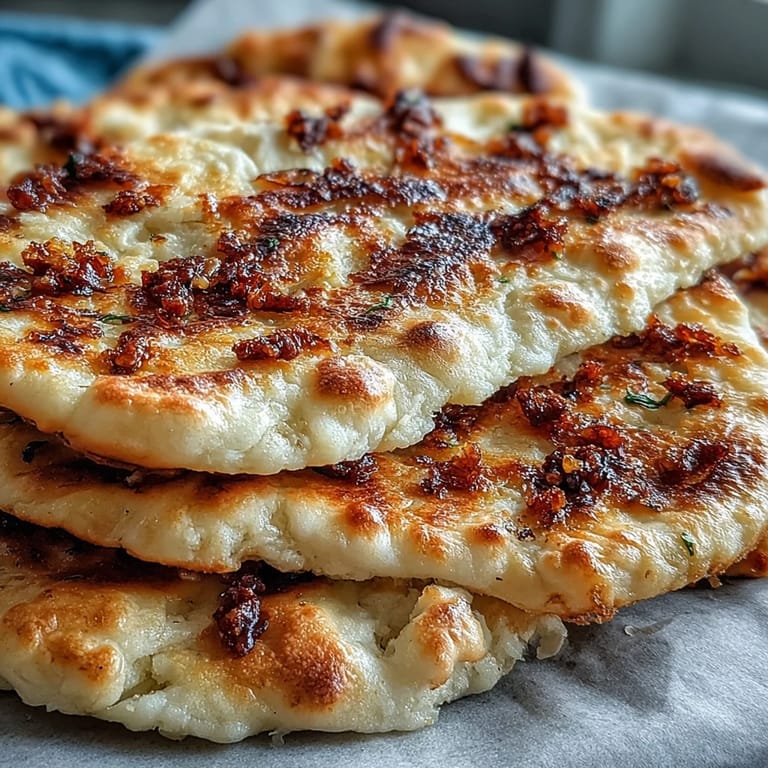
- Lay one naan in the skillet and let it cook for two to three minutes until bubbles start forming all over the top. The underside should have golden brown spots.
- Flip and finish:
- Flip the naan and cook for another one to two minutes until the second side gets those same caramelized spots. Remove it immediately so it doesn't dry out.
- Brush with garlic butter:
- Mix melted butter with minced garlic and brush it generously over the hot naan. The heat will release all that garlicky aroma and soak right in.
 Pin it
 There's something deeply satisfying about tearing into warm naan that you made with your own hands. My kids started asking for naan night instead of pizza night, which I never saw coming. Now it's become this little tradition where everyone gets to brush their own garlic butter on, and somehow that makes it taste even better.
Storing and Reheating
Naan is always best fresh, but leftovers can be wrapped in foil and stored in the fridge for up to three days. I reheat mine in a dry skillet over medium heat for about 30 seconds per side, and it comes back to life beautifully. You can also freeze them with parchment paper between each piece, then thaw and warm them up whenever a craving hits.
Flavor Variations
Once you've nailed the basic version, you can get creative with the toppings. I've sprinkled nigella seeds on top before cooking, brushed on herb butter with cilantro and lime, and even added crumbled feta for a fusion twist. Some nights I skip the garlic altogether and just use melted ghee with a pinch of flaky salt. The dough is forgiving, so don't be afraid to experiment.
Pairing Suggestions
Naan is the ultimate sidekick for any curry, whether it's a rich butter chicken or a simple dal. I've also used it as a base for flatbread pizzas, wrapped it around grilled chicken and veggies, and even torn it up to dip into hummus or baba ganoush. One time I made a batch just to eat with scrambled eggs and hot sauce, and it was honestly one of the best breakfasts I've had.
- Try it with a creamy tikka masala or spicy vindaloo for classic pairing.
- Use it as a wrap for kebabs, grilled paneer, or roasted vegetables.
- Serve it alongside soups or stews when you want something heartier than crackers.
 Pin it
 Once you get the rhythm down, making naan becomes second nature, and you'll wonder why you ever bought it from the store. There's nothing quite like pulling that last piece off the skillet, brushing it with butter, and knowing you made something this good from scratch.
Frequently Asked Questions
- → What makes naan different from other flatbreads?
Naan traditionally uses yogurt in the dough, which creates a softer, more tender texture compared to other unleavened flatbreads. The combination of yeast fermentation and dairy results in those characteristic puffy bubbles and pillowy consistency that makes naan perfect for soaking up curries and sauces.
- → Can I make the dough ahead of time?
Absolutely. You can prepare the dough and let it rise in the refrigerator for up to 24 hours. Cold fermentation actually develops more complex flavors. When ready to cook, bring the dough to room temperature for about 30 minutes before rolling and cooking.
- → Why use a cast iron skillet?
Cast iron provides consistent, high heat that creates those signature charred bubbles and golden-brown spots on naan. The heavy retention ensures even cooking and helps achieve the slightly crispy exterior while maintaining a soft interior. A heavy-bottomed pan works well as an alternative.
- → How do I store and reheat leftover naan?
Store cooled naan in an airtight container or ziplock bag for up to 2 days. For longer storage, freeze individually wrapped pieces for up to 3 months. Reheat directly from frozen in a hot skillet for 1-2 minutes per side, or wrap in foil and warm in a 350°F oven for 5-7 minutes until heated through.
- → Can I make this vegan?
Yes, simply substitute plain yogurt with coconut yogurt or another plant-based alternative, and replace butter with vegan butter or olive oil. The texture and flavor will remain excellent, though coconut yogurt may add a subtle sweetness that complements the garlic beautifully.
- → What can I add to customize my naan?
Fold chopped fresh cilantro, minced green chilies, or grated cheese into the dough before rolling. You can also sprinkle nigella seeds, kalonji, or coarse sea salt on top before cooking. The garlic butter topping can be enhanced with fresh herbs like parsley or additional spices like paprika for extra depth.