 Save
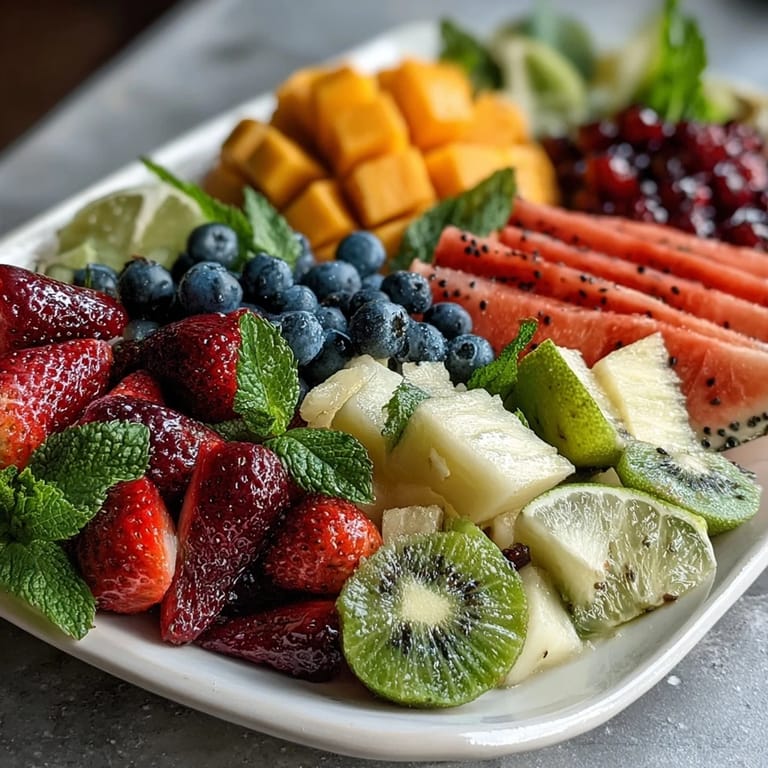
Save Last summer, I showed up to my cousin's garden party with this fruit display, and honestly, I wasn't sure if it would be enough of a statement. But watching everyone's faces light up when they saw those brilliant colors arranged on the tiered stand—the golden mangoes, the sunny pineapple, the jewel-like berries—I realized that sometimes the simplest food holds the most magic. This isn't a dish you cook; it's a moment you create with your hands, a celebration of what grows sweetest when the sun shows up.
My neighbor stopped by mid-prep once and asked if I was preparing for a wedding, then seemed genuinely touched when I told her it was just a Tuesday afternoon potluck. She ended up staying for an hour, teaching me how her mother always fanned the mango slices to catch the light differently. Small moments like that remind me why I make these displays—they invite people to slow down and notice the work in simplicity.
Ingredients
- Ripe mangoes (2): The sweetness of a perfect mango is non-negotiable—press gently near the stem and trust your nose, not the calendar on the wall.
- Large pineapple (1): A fresh pineapple smells unmistakable; that's your signal it's ready to shine.
- Kiwis (2): Their bright green and tiny seeds add visual surprise and a tart counterpoint to the sweeter fruits.
- Papaya (1): Choose one that yields slightly to pressure; it brings creamy texture and pale, delicate color to the arrangement.
- Dragon fruit (1): More for drama than flavor, but that hot pink flesh stops conversation cold.
- Seedless red grapes (1 cup): They roll, they shine, and they're a textural break from the sliced fruits.
- Fresh strawberries (1 cup): Halved lengthwise to show their beautiful interior, they deserve space of their own on the platter.
- Blueberries (1 cup): The smallest berries become jewels when nestled between larger fruit—never underestimate their power.
- Fresh mint leaves (1/4 cup): A whisper of mint tied to the whole arrangement with just its aroma; add it last so the leaves stay alive and bright.
- Lime wedges: Both functional and gorgeous, they're permission to squeeze and refresh as you eat.
- Vanilla Greek yogurt (1 cup, optional): Creamy, cooling, and slightly tangy—it catches the sweetness and makes the fruit taste even fresher by contrast.
- Honey or agave (1 tablespoon): Just enough sweetness to balance the yogurt's tartness without overpowering anything.
- Lime zest: The oils in lime skin are where the real flavor lives, so don't skip this small gesture.
Tired of Takeout? 🥡
Get 10 meals you can make faster than delivery arrives. Seriously.
One email. No spam. Unsubscribe anytime.
Instructions
- Gather your mise en place:
- Line up all your cut fruits on a clean counter before you even touch the platter. This moment of organization is when you see which pieces need adjusting and where the gaps in color might be.
- Prep with intention:
- Slice mangoes from the pit with a confident stroke, then score the flesh in a crosshatch if you want that fan effect—it catches light like nothing else. Peel the pineapple deeply enough to remove all those tough eyes, then cut lengthwise into spears or chunk it into pieces, depending on your mood.
- Peel and prepare the rest:
- Kiwis are forgiving; just use a vegetable peeler or a paring knife to strip the brown skin away. Papaya and dragon fruit should be halved, seeded if necessary, and sliced with a gentle hand—they bruise if you're rough.
- Arrange with both eyes and hands:
- Start with your heaviest, most substantial fruits at the center or base—mango and pineapple—and fan or layer them so they show their best side. Then think like you're painting: alternate warm and cool tones, place round berries next to sliced fruit, and leave breathing room between colors so each one sings.
- Build outward with rhythm:
- Circle the main fruits with papaya, then dragon fruit, then a ring of kiwi. Tuck grapes into the gaps where they'll roll slightly and catch eyes. Scatter blueberries like small secrets in the corners and crevices.
- Finish with life:
- Just before serving, scatter mint leaves across the display with no particular system—their random placement feels natural and smells like you care. Arrange lime wedges where they're easy to grab.
- Make the dipping sauce if you're feeling generous:
- Whisk yogurt with honey and lime zest until smooth and slightly sweetened, then pour into a small bowl and nestle it somewhere accessible on the platter. This sauce is optional but shifts everything from a side dish to an experience.
- Chill until the moment arrives:
- Keep the whole display in the refrigerator covered loosely with plastic wrap so the mint doesn't wilt but the flavors stay cold and bright.
 Pin it
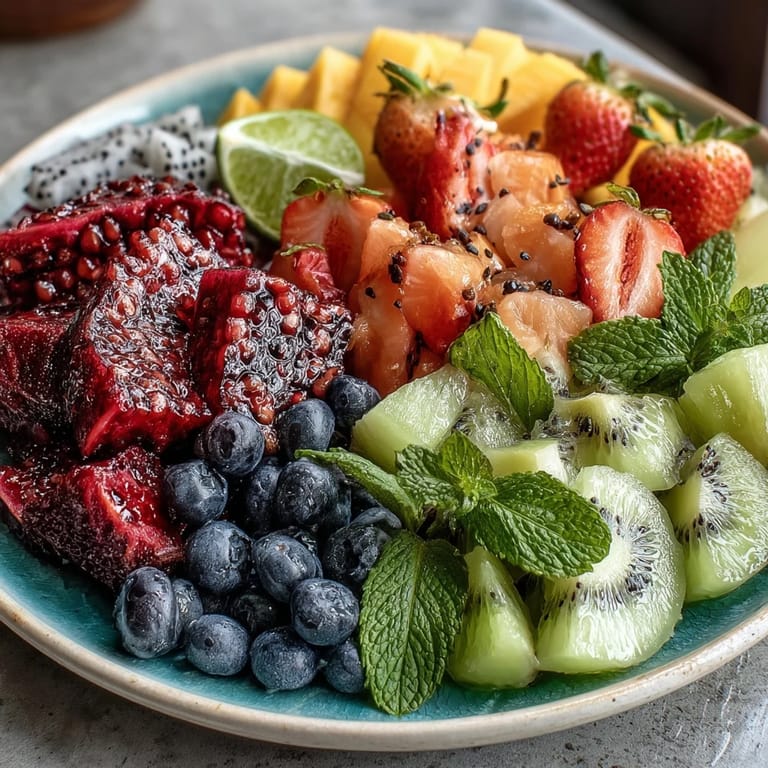
 I'll never forget watching my five-year-old niece stand on her tiptoes to reach a strawberry from this display at her birthday party, her whole face lighting up at the choice of colors. That's when I understood: this arrangement isn't about impressing anyone with technique. It's about inviting people to eat with their eyes first, to feel celebrated by the care you took to make abundance look simple and joyful.
The Art of Color and Balance
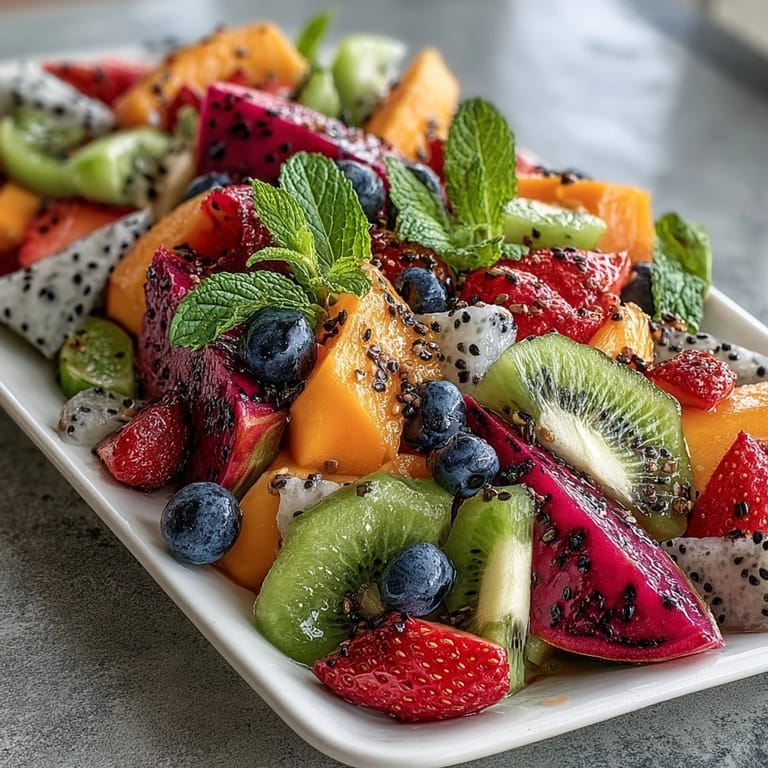
When you're arranging fruit, think about how photographers think about composition. Warm tones—the golden mango, the coral papaya, the red strawberries—naturally draw the eye, so scatter them strategically rather than clustering them in one corner. Cool tones like the kiwi green and blueberries cool things down visually, and the bright pink dragon fruit acts like punctuation, a surprise that makes people smile when they notice it. The grapes are your sneaky secret ingredient because they catch light differently than sliced fruit and add movement to an otherwise still arrangement.
Timing and Freshness
The best displays happen when you work backward from when you'll serve. If you're showing up to an afternoon gathering, prep that morning so everything is cold and crisp. If it's an evening event, give yourself an hour before, no more. Fruits start to oxidize and lose their sheen the longer they sit exposed to air, and there's something about eating a piece you just cut that tastes impossibly fresher than one that's been waiting.
Customization and Seasonal Flexibility
This display adapts beautifully to whatever your market offers. In autumn, add pomegranate arils and persimmons; in spring, swap in fresh berries and stone fruits; in winter, lean into citrus and kiwi. The formula stays the same—variety, contrast, and generosity—but the specific fruits shift with the seasons. I've found that working with what's freshest locally always tastes and looks better than forcing tropical fruits when they've been shipped too far.
- Edible flowers like pansies or nasturtiums add a whimsical flourish and taste faintly floral without overwhelming anything.
- Toasted coconut flakes scattered on top provide a textural surprise and a whisper of richness that complements the fruit's natural sweetness.
- A squeeze of fresh lime juice over the whole display just before serving brightens every flavor and prevents oxidation of the softer fruits.
 Pin it
 This display is proof that hospitality doesn't require hours at the stove or complicated techniques. What it requires is attention, a sharp knife, and the belief that good fruit, well-presented, is a gift worth giving.
Frequently Asked Questions
- → How should I prepare the mangoes and pineapples for the display?
Peel and pit the mangoes, then slice them thinly. For pineapples, peel, core, and cut into spears or chunks. Arrange these at the center or base for visual impact.
- → What fruits complement mango and pineapple in this arrangement?
Kiwis, papaya, dragon fruit, grapes, strawberries, and blueberries provide a colorful and flavorful contrast in both taste and texture.
- → Can I customize the garnish for this fruit display?
Yes, fresh mint leaves and lime wedges add aroma and brightness. Optional edible flowers or toasted coconut flakes are beautiful alternatives.
- → Is there a recommended dipping sauce to serve alongside?
A vanilla Greek yogurt-based sauce sweetened with honey or agave and brightened with lime zest complements the tropical fruits nicely and can be adapted for vegan diets.
- → How long can the fruit display be prepared in advance?
Prepare and slice the fruits shortly before serving to maintain freshness. Keep the display chilled and covered to preserve texture and flavor.