 Save
Save There's something quietly rebellious about making lasagne in a single pan, especially when it turns out this good. I discovered this method on a particularly lazy Sunday when I couldn't face washing multiple dishes, yet desperately wanted something warm and layered and deeply satisfying. What started as a shortcut became my favorite way to build this dish, and now I find myself craving that smoky, lentil-rich sauce with mushrooms that somehow taste like they've been cooking for hours, not minutes.
My friend Emma arrived unannounced on a Wednesday evening, visibly exhausted from work, and I threw this together while she sat at my kitchen counter telling me about her day. By the time the aroma of smoked paprika and caramelizing mushrooms filled the kitchen, she'd shifted from complaining to laughing, and when we pulled it from the oven golden and bubbling, she actually said, "I didn't know comfort food could smell this good." That moment sealed it for me: this recipe has the rare ability to transform an ordinary evening into something worth remembering.
Ingredients
- Olive oil: Use good quality here since it's the base for everything that follows; cheap oil won't carry the flavor through.
- Onion, garlic, carrots, celery, red bell pepper: This is your aromatics base, and the soffritto principle applies even in vegetarian cooking; don't rush these first minutes.
- Mushrooms: Finely chop them so they break down into the sauce, adding umami depth that mimics what meat would contribute.
- Courgette (zucchini): Diced small, it softens quickly and adds moisture that helps create the saucy consistency you need between layers.
- Smoked paprika: This is your secret weapon for depth; regular paprika won't give you that same smoky complexity.
- Dried oregano and thyme: Store-bought dried herbs work beautifully here since they'll simmer long enough to bloom and mellow.
- Chili flakes: Optional but worth adding if you like heat; they brighten the sauce and prevent it from feeling one-note.
- Canned chopped tomatoes and tomato paste: Tomato paste concentrates the flavor, while canned tomatoes provide body; don't skip either.
- Red lentils: Rinse them beforehand to remove any dust, and they'll cook down into the sauce by the time everything's done.
- Vegetable stock: This is where your sauce gets its backbone; use proper stock, not just water.
- Balsamic vinegar: Added at the end, it rounds out the flavors and prevents the sauce from tasting flat or one-dimensional.
- No-boil lasagne sheets: These save time and honestly produce a better texture than pre-boiled sheets; they soften perfectly in the oven.
- Ricotta, mozzarella, Parmesan: The trio works because ricotta spreads easily, mozzarella melts into strings, and Parmesan adds a sharp contrast.
- Fresh basil: Tear it just before serving so it releases its oils and adds brightness to every bite.
Tired of Takeout? 🥡
Get 10 meals you can make faster than delivery arrives. Seriously.
One email. No spam. Unsubscribe anytime.
Instructions
- Sauté your base:
- Heat olive oil in your ovenproof skillet over medium heat and add the chopped onion, cooking for 3 to 4 minutes until it turns translucent and softens. You'll know it's ready when it releases that sweet, caramelized aroma that makes you pause and appreciate what's happening in the pan.
- Build the flavor foundation:
- Stir in garlic, carrots, celery, and red bell pepper, then cook for about 5 minutes until the vegetables just begin to tender. Listen for the gentle sizzle and watch how the colors intensify; this is aromatics doing their job.
- Add the mushroom magic:
- Introduce the finely chopped mushrooms and diced courgette, cooking for 5 to 6 minutes until they've softened and released their moisture into the pan. The moisture will evaporate, concentrating all that earthiness into your sauce.
- Toast the spices:
- Sprinkle in the smoked paprika, dried oregano, thyme, and chili flakes if using, cooking for just 1 minute. You'll smell the transformation immediately; this is when the sauce shifts from vegetable-forward to deeply aromatic.
- Build the sauce body:
- Stir in your chopped tomatoes, tomato paste, rinsed red lentils, and vegetable stock, then season with salt and pepper to taste. Bring everything to a gentle simmer, cover the pan, and cook for 20 to 25 minutes until the lentils have softened completely and the sauce has thickened but still flows.
- Finish with acid and balance:
- Stir in the balsamic vinegar, which will seem subtle but will brighten everything, preventing the sauce from tasting heavy or flat. Taste and adjust seasoning; this is your moment to own the flavors.
- Preheat while assembling:
- Set your oven to 180°C (350°F) while you prepare to layer, so it's ready when you are.
- Remove half the sauce:
- Carefully scoop out roughly half of your veggie bolognese and set it aside on a plate or in a bowl. This creates the right proportion for your layers and ensures every section has sauce throughout.
- Create the first layer:
- Arrange lasagne sheets directly over the remaining sauce in the skillet, breaking or overlapping them as needed to fit your pan's shape. This is where no-boil sheets prove their worth; they'll soften perfectly from the steam and sauce.
- Dollop and sprinkle:
- Spread half of your ricotta over the lasagne sheets in rough dollops, then sprinkle with a third of the combined mozzarella and Parmesan. The ricotta won't spread like cream cheese, and that's intentional; these small pockets melt into creamy surprises.
- Layer the reserved sauce:
- Spread half of your reserved veggie bolognese over the cheese layer, ensuring it reaches the edges where it'll prevent the sides from drying out. This is the moment everything starts looking like real lasagne.
- Repeat the sequence:
- Top with another layer of lasagne sheets, then the remaining ricotta, another third of the mozzarella and Parmesan mixture, and finally the last of your veggie bolognese. You're creating distinct flavor zones that will taste slightly different with each forkful.
- Crown with pasta and cheese:
- Finish with a final layer of lasagne sheets and top with the remaining mozzarella and Parmesan, which will turn golden and slightly crispy in the oven. This crowning layer is what everyone notices first.
- Bake covered, then revealed:
- Cover your skillet tightly with foil and bake for 25 minutes, then remove the foil and bake for another 10 to 15 minutes until the top is golden and the sauce bubbles at the edges. The foil prevents the top from browning too quickly before everything heats through.
- Rest before serving:
- Let the lasagne sit undisturbed for 10 minutes after removing from the oven, which allows the layers to set slightly and makes serving cleaner. Use this time to tear fresh basil and set the table.
- Finish and serve:
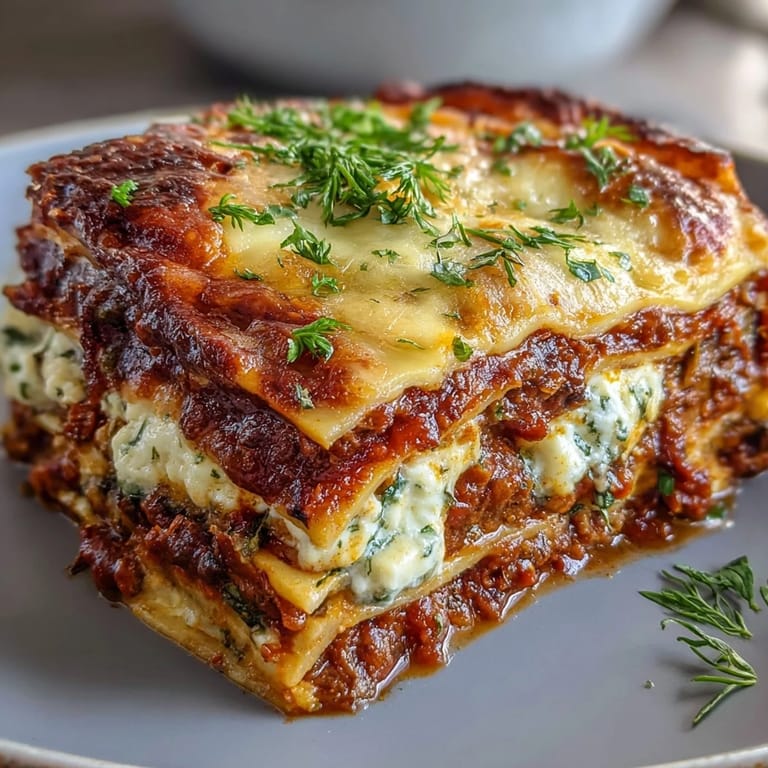
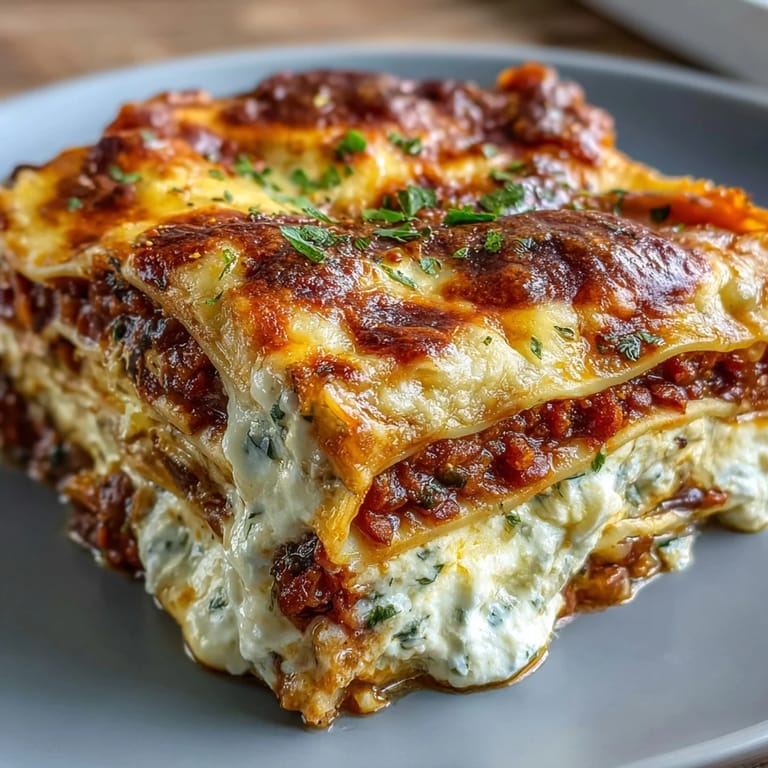
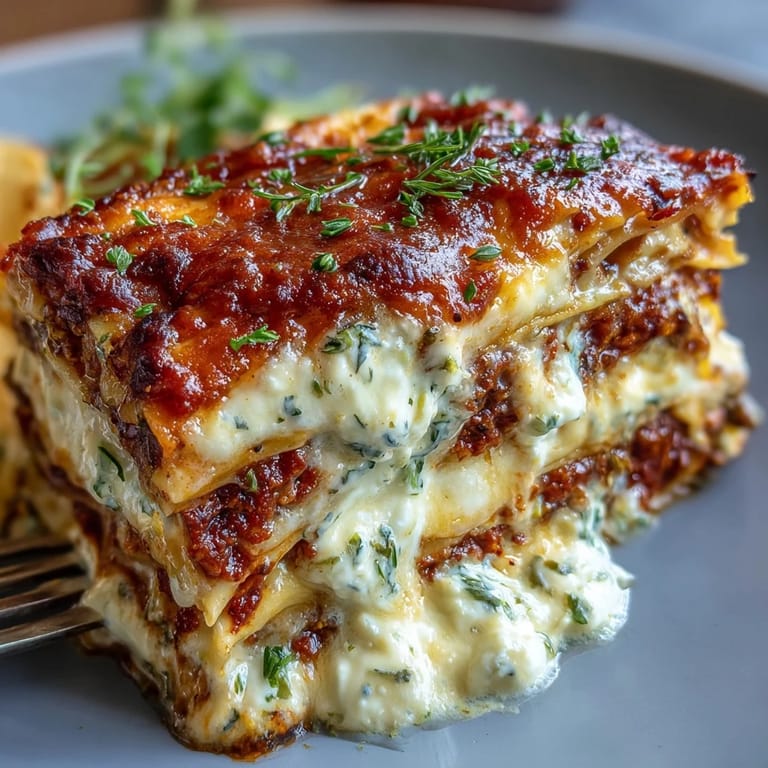
- Scatter torn fresh basil over the top just before serving, letting its brightness and aroma complete the dish. Each serving should show distinct layers and hold together with just enough sauce to keep everything connected.
 Pin it
 I made this for my sister's book club gathering, and something unexpected happened: instead of being the side dish that got picked at, it became what people asked for seconds of, what they asked for the recipe for, and what they mentioned weeks later. That's when I realized this isn't fancy food or trendy food; it's the kind of food that makes people feel cared for, that satisfies something deeper than hunger.
Why Single-Pan Cooking Changes Everything
There's a practical magic to building an entire lasagne in one vessel: the pan absorbs all the aromatic flavors from your initial sauté, layers that flavor into everything that follows, and by the time you're assembling, your skillet has become a flavor conductor that's been working toward this moment since you added the first onion. Beyond the obvious cleanup advantage, cooking this way means less heat loss, more consistent temperature control, and the sauce stays in direct contact with the vegetables throughout cooking, which deepens the integration of flavors in ways that separate pots simply can't achieve.
The Lentil Advantage Over Meat
Red lentils are understated culinary heroes that most home cooks don't fully appreciate: they cook quickly, add protein and fiber without any of the heaviness that traditional meat-based Bolognese can carry, and they break down into the sauce creating this velvety texture that feels indulgent rather than virtuous. The beauty is they don't announce themselves as a meat substitute; they're just part of the sauce, contributing thickness, nutrition, and a subtle earthiness that rounds out the mushrooms and vegetables.
Assembly Wisdom and Serving Suggestions
The moment you pull this from the oven, your kitchen will smell like a proper Italian grandmother's kitchen, and that's not an accident; it's the result of layering, patience, and respecting the ingredients. Serve this with a simple green salad dressed in lemon and olive oil to cut through the richness, add crusty bread for scooping up every bit of sauce, and pour a light Italian red like Chianti if you're in the mood for wine that complements rather than competes.
- Rest time matters: Those 10 minutes aren't laziness; they're structural engineering that makes serving neat and beautiful.
- Leftovers improve overnight: The flavors deepen when left to sit in the refrigerator, so don't hesitate to make this a day ahead.
- Vegan adaptations work surprisingly well: Plant-based ricotta, mozzarella, and Parmesan have come far enough that they melt and flavor properly without missing a beat.
 Pin it
 This lasagne taught me that sometimes the best recipes are the ones born from not wanting to do too much, from choosing simplicity without sacrificing satisfaction. That's the whole philosophy here: minimal fuss, maximum flavor, and a kitchen that still feels manageable when dinner's done.
Frequently Asked Questions
- → Can I make this lasagne vegan?
Yes, simply substitute the ricotta, mozzarella, and Parmesan with plant-based cheese alternatives. The rest of the ingredients are already plant-based.
- → What type of pan works best for this dish?
Use a large, deep ovenproof skillet or sauté pan that can go from stovetop to oven. Cast iron or stainless steel pans with oven-safe handles work perfectly.
- → Can I prepare this ahead of time?
Absolutely. Assemble the lasagne completely, cover tightly, and refrigerate for up to 24 hours. Add 10-15 minutes to the baking time if cooking from cold.
- → How do I prevent the lasagne from drying out?
Ensure your veggie bolognese is quite saucy before layering, and keep the pan covered with foil for the first 25 minutes of baking to trap moisture.
- → What can I serve alongside this lasagne?
A simple green salad with vinaigrette, garlic bread, or roasted vegetables complement this dish beautifully. A light Italian red wine like Chianti pairs wonderfully.
- → Can I freeze leftovers?
Yes, portion out cooled lasagne into airtight containers and freeze for up to 3 months. Thaw overnight in the refrigerator and reheat in the oven until warmed through.